
Choosing leather for handbag development is not only a visual decision. A buyer needs to consider texture, cutting yield, handfeel, thickness, application area and how the material will be described to customers.
Start From Product Use
A structured tote needs a different surface behavior from a soft hobo or a small leather good. The same texture can look sharp on a flat panel and softer on a folded body.
Match Texture With Clear Language
Use precise sourcing language: embossed cow leather, waxed leather, cutline texture or reptile-effect leather. Clear words reduce misunderstandings between brands, factories and buyers.
Relevant Lianyi Materials
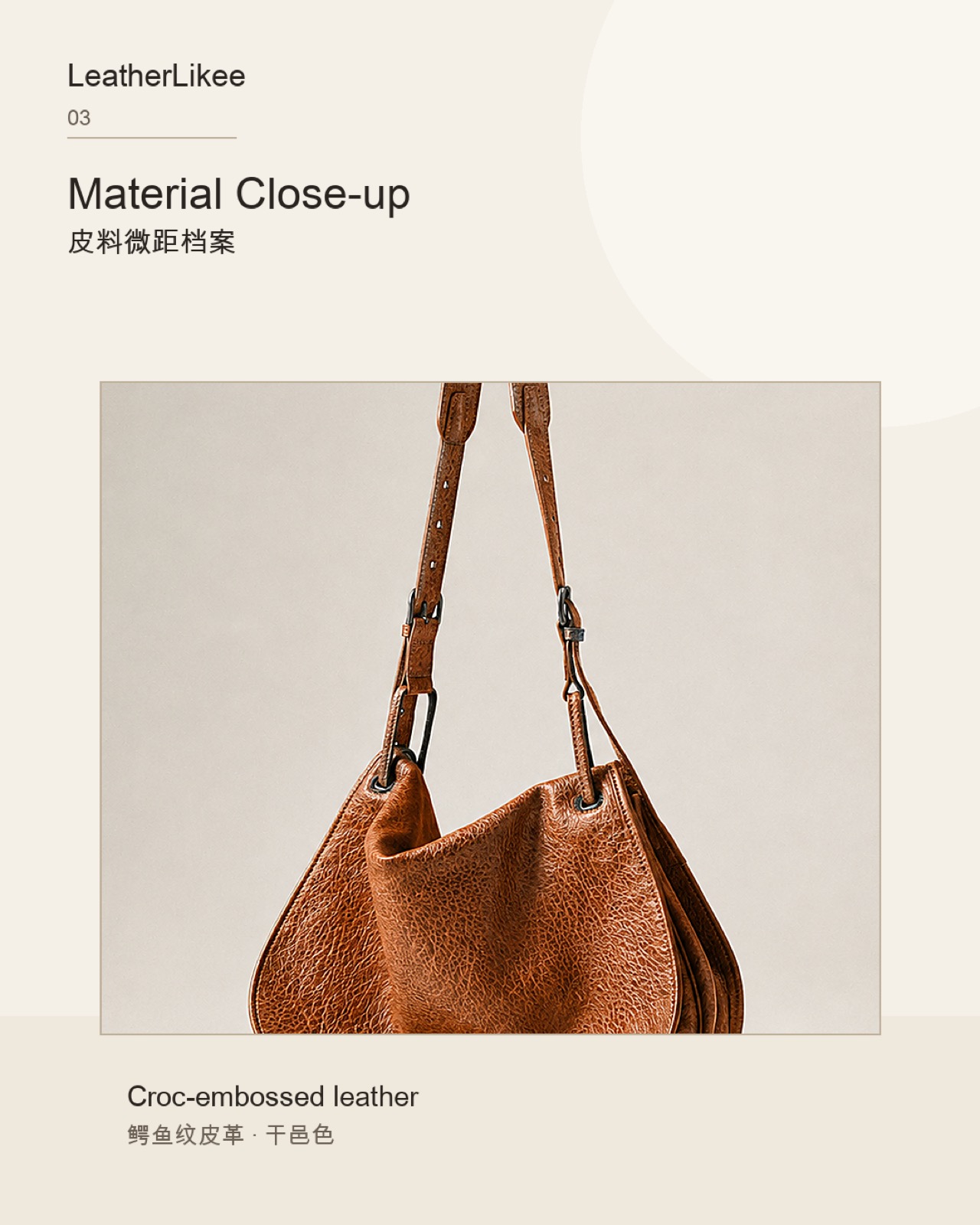
- Cognac Croc™|RC-COGNAC
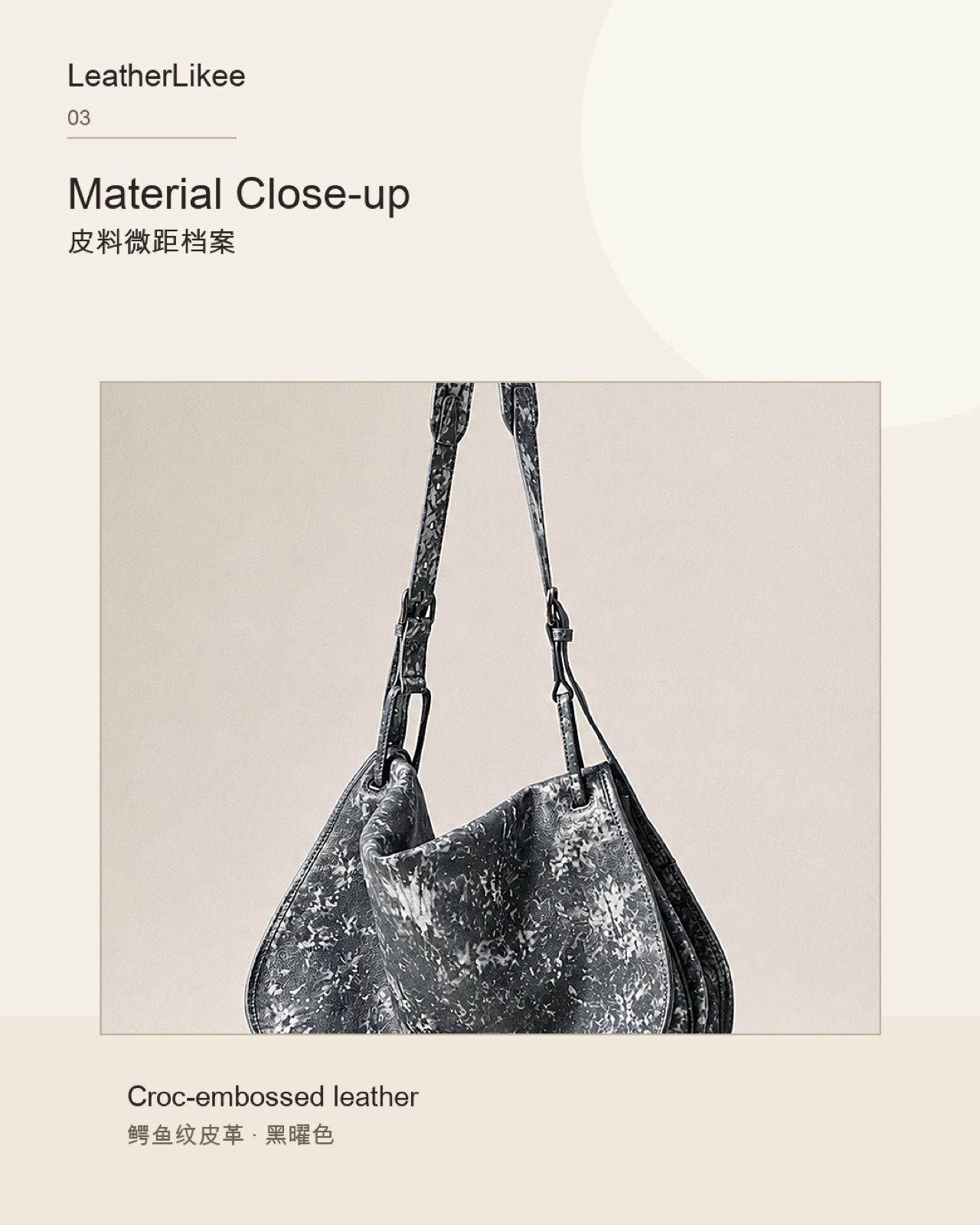
- Obsidian Croc™|RC-OBSIDIAN
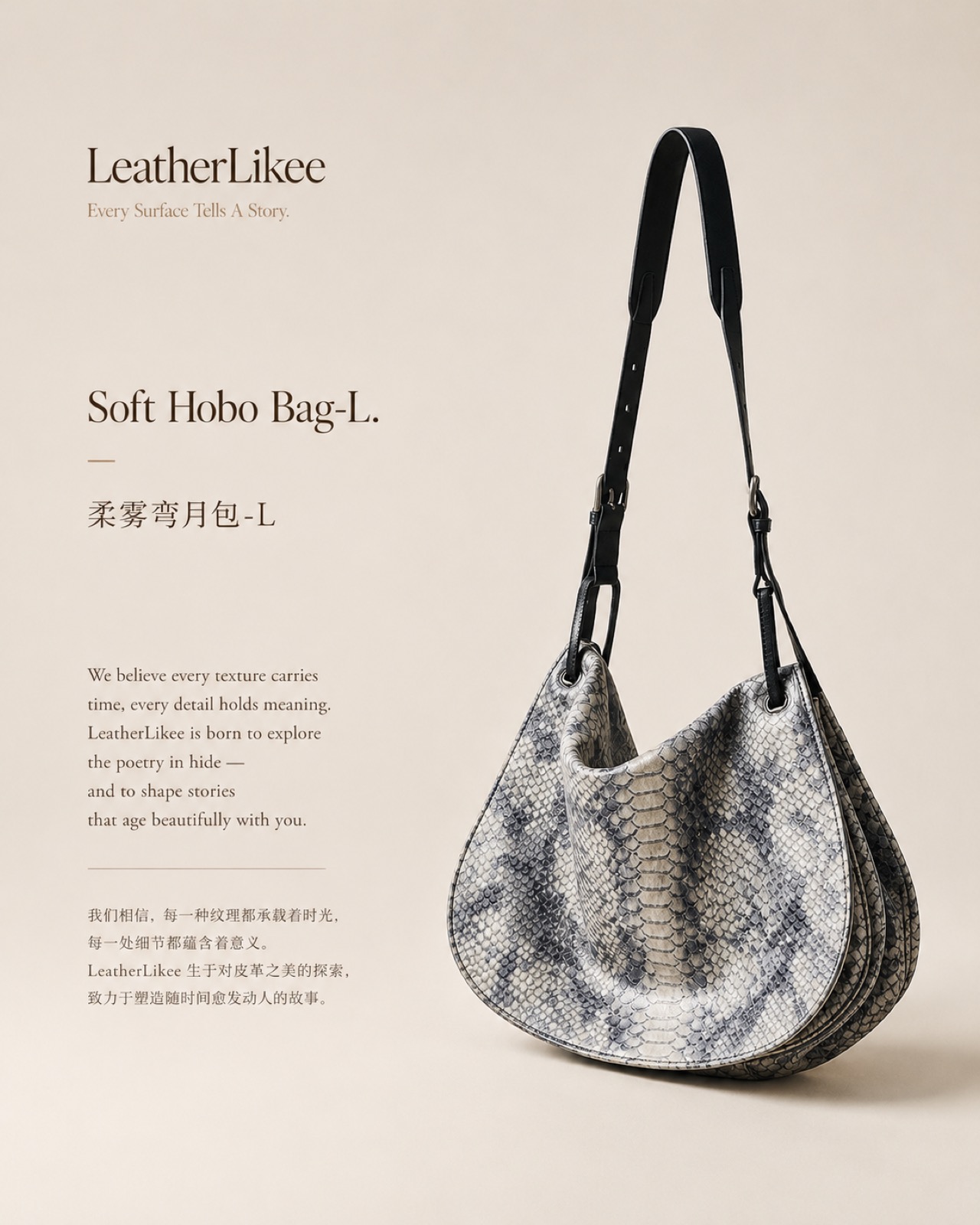
- Monochrome Python™|RP-MONOCHROME
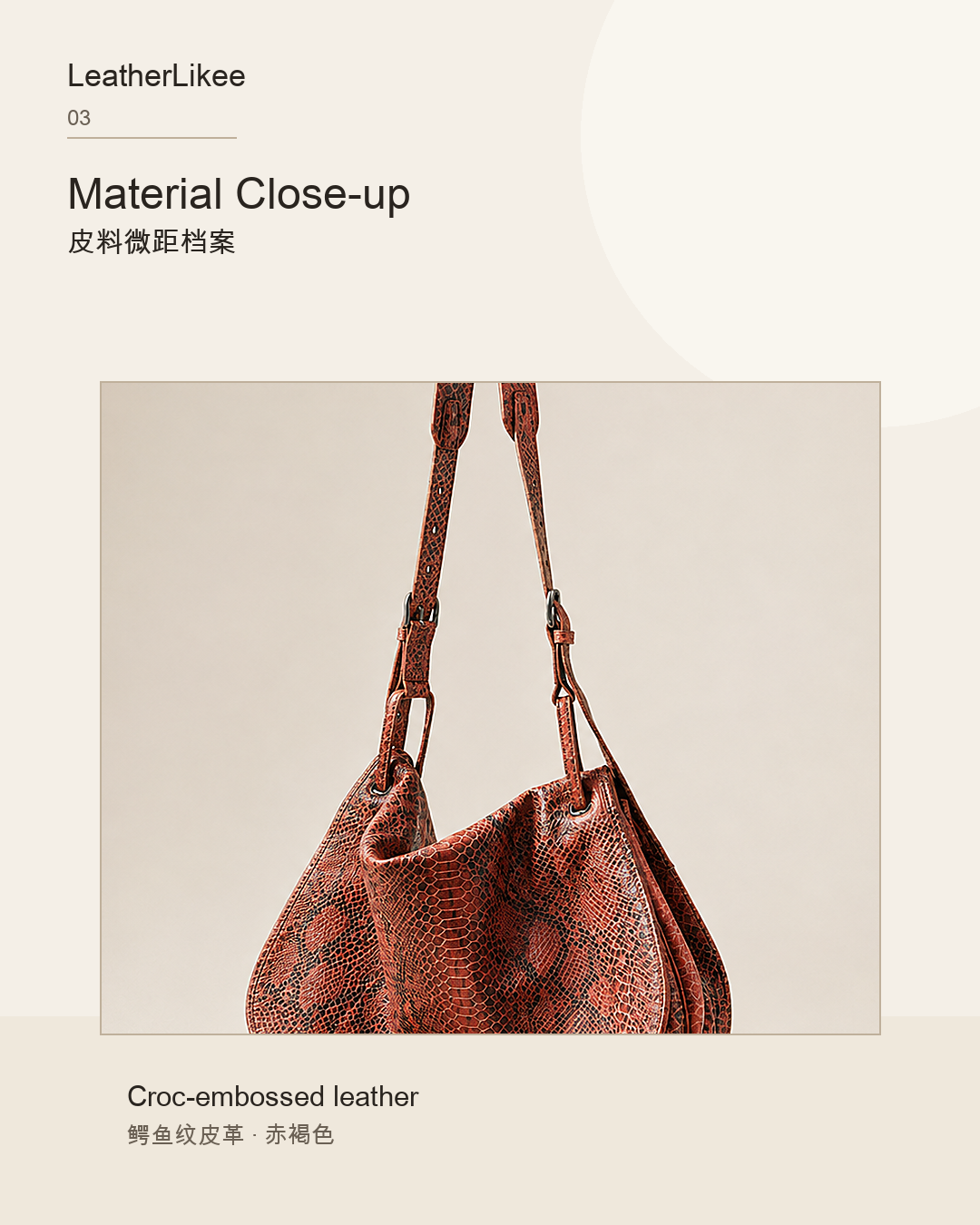
- Russet Croc™|RC-RUSSET
Buyer Checklist
- Confirm leather type, thickness, backing and color batch.
- Check handfeel, cutting yield and surface consistency before bulk production.
- Use accurate words such as embossed cow leather, oil-wax finish, texture-effect leather or cutline leather.
FAQ
What is the safest way to describe animal-effect texture?
Use embossed cow leather or reptile-effect textured leather unless the exact leather origin has been formally verified.